
Man of History
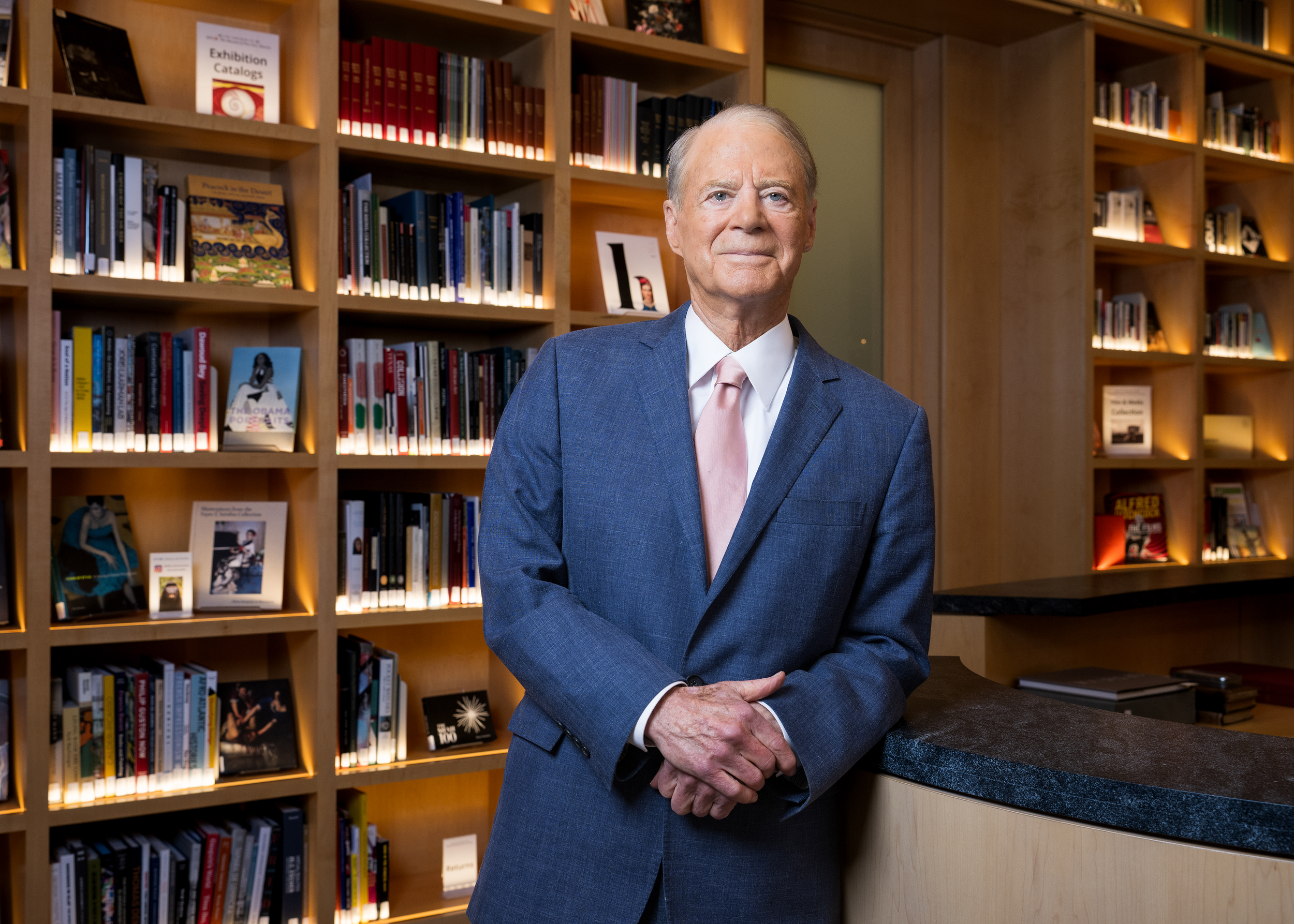
J.P. is one of Texas’ most ardent and well-known history enthusiasts, which makes perfect sense: history is literally in his blood. His great-great-great-grandmother was Stephen F. Austin’s sister and one of the "Old Three Hundred" who journeyed into what was then Northern Mexico to settle the rich bottomlands of the Brazos River. J.P. grew up just steps from the family’s original homestead near Freeport, Texas. Over the last 50 years, he has eagerly shared this lifelong passion with his community. Together with his wife, Mary Jon, he preserved an entire town and its historic Gage Hotel in Marathon and collected more than 70,000 objects and documents related to the settling of the American West. The couple also saved a historic orphanage in Galveston, transforming it into the Bryan Museum to house their vast collection and share it with the world.
While J.P. always knew and loved history, his specific passion for preservation didn’t develop until much later. In 1972, he and Mary Jon bought a house on Shadow Lawn Street in Houston, located in what is known today as the Museum District. It was their first time living in Houston, and within two years, they were confronted with a conundrum familiar to anyone owning property within the city limits: encroaching commercial development.
What did J.P.’s experience with the South Main Alliance help him understand about the importance of preservation?
Houston’s population was exploding at the time. Nearly one million people flowed into the city between 1969 and 1980 to take advantage of the roughly 670,000 jobs created by the booming oil and gas industry. The city was bursting at its seams. The Texas Medical Center (TMC), located just south of Hermann Park and the Bryans’ new home, was also rapidly expanding. When first organized in 1943, the TMC spanned just 134 acres and included only the new University of Texas Hospital for Cancer Research and Baylor College of Medicine. By 1972, however, 18 different institutions were based at the TMC and it desperately needed more space.
Enterprising developers soon set their sights on the areas south, west and east of the medical center, placing a bullseye squarely on J.P. and Mary JonÕs quiet little neighborhood. In late 1976, J.P. and his neighbors became involved in the creation of the new South Main Center Association, after Rice University researchers released a study titled “Options for a Unique Texas Place.” The National Endowment for the Arts funded the study. Tom Fatjo was the first chair. He served one day before appointing J.P. his successor. It was a fait accompli, but J.P. believed in the difference the organization could make within the community. He also knew he couldn’t do it alone and the organization needed full time professional staff to do the job right, so he hired Candyce Rylander in 1976 as the organization’s first executive director. J.P. served as chair from 1976 to 1980.
How good neighbors make good neighborhoods: hear J.P. tell the story of his friendship with Tom Fatjo, first chair of what was then the South Main Center Alliance.
What makes Houston great? For Bryan, Houston is a city of opportunity:
“Houston is the energy capital of the world. It has energy and I think it comes from people having the opportunity to do things, to recognize their dreams, and [to have] the freedom and support to do so. One thing great about Houston, I’ve observed over the years of residence here, people will always move over and let the next person if they bring something to the equation, if they have something to give you’ve got a place in this community. It doesn’t have anything to do with your social background or who you may know or don’t know. It has to do with what you can do, what can you achieve.”